
0% VAT on solar and batteries, then back to 5%.
The zero rate on qualifying domestic installations runs until 31 March 2027. After that the reduced rate of 5% applies, not 20%. On a £9,300 system that difference is about £465.
✓ Six questions, no salesperson, no obligation.
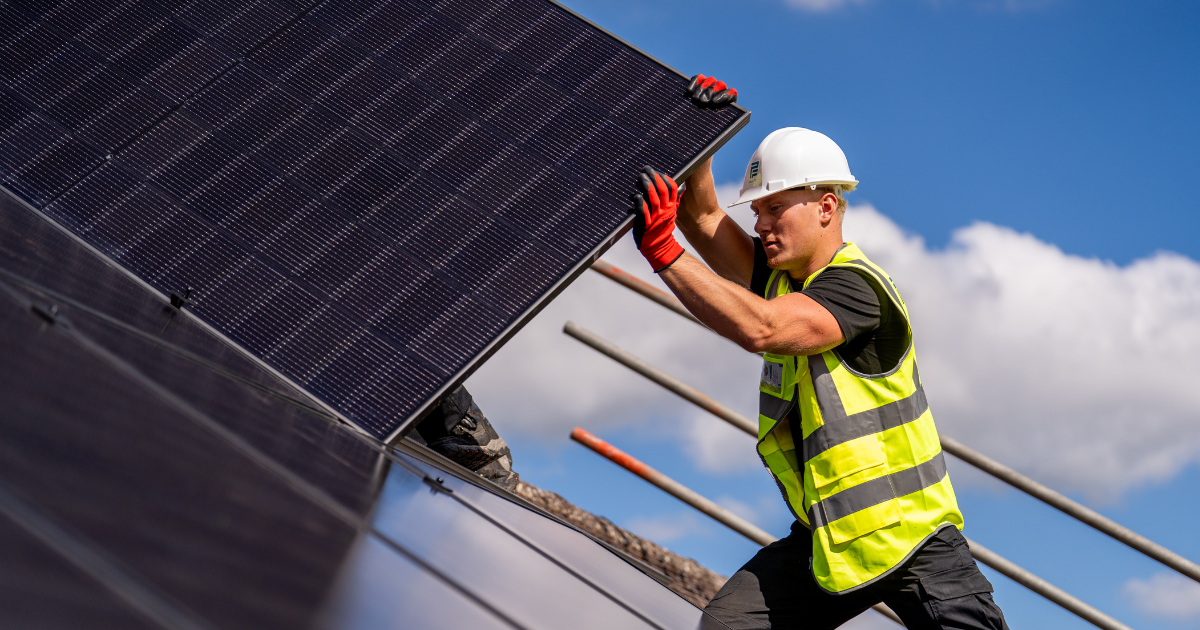
Most popular build, today
4kW solar with a 10kWh battery. About £465 more once 5% returns.
Accreditation marks and review scores are added here once verified.
What 5% adds to each of our four builds.
Our published prices already have the zero rate applied. The right-hand column is roughly what the same installation would cost once the reduced rate returns, on today's prices.
| Build | Price now, 0% VAT | Roughly what 5% adds |
|---|---|---|
| 4kW solar | £5,300 | + £265 |
| 4kW solar + 5kWh battery | £7,900 | + £395 |
| 4kW solar + 10kWh battery | £9,300 | + £465 |
| 5 to 6kW solar + 13.5kWh battery | £12,500 | + £625 |
Figures are rounded and based on today's published starting prices for a standard pitched roof. They are not a forecast of what equipment will cost in 2027. Your own price is fixed only after a free survey.
The diary fills up before the deadline does.
There are a fixed number of installation days between now and 31 March 2027, and a fair chance most people leave it until the last few months.
01
A solar installation is not a same-week job
Survey, design, ordering the equipment, booking scaffold and notifying your network operator all sit between the day you say yes and the day the panels go on. Weeks, not days, and that is in a normal month.
02
Deadlines bunch demand
Scaffolders, equipment supply and our own installation teams are all finite. If the whole county tries to be installed in the first quarter of 2027, some of those jobs will land the other side of the deadline and pay 5%.
03
No savings figure before a survey
We do not put a figure on what you might save until a surveyor has seen your roof, your usage and your tariff. The VAT date is the one fixed number here, and it is set in legislation.
Relief ends
Then the reduced rate of 5% applies to qualifying installations.
What we would need from you.
Four things, none of them onerous, and you can stop after any of them.
-
Your postcode and a rough idea of your usage Enough to give you an indicative price online in about a minute. A recent electricity bill helps but is not required at this stage.
-
About an hour for a survey Someone needs to see the roof, the loft, the consumer unit and the scaffold access. Nothing is sold at this visit and there is no obligation at the end of it.
-
Access to the loft and the meter The two places the surveyor actually has to get to. If either is behind a wardrobe or a lifetime of boxes, a bit of warning helps.
-
A decision, in your own time You get a fixed price in writing, and 14 days to change your mind after the contract is agreed. The price does not drop if you hesitate.
See a price for your roof before the rate changes.
Six questions about your roof and your usage, and a number at the end. If it works for you, book a survey and we will fix it in writing. If it does not, you have lost a minute and given us nothing.
The small print on this page
The relief. A zero rate of VAT applies to the installation of qualifying energy saving materials, including solar panels and battery storage, in residential accommodation in Great Britain. The zero rate runs until 31 March 2027. From 1 April 2027 those installations revert to the reduced rate of 5%. They do not go to the standard rate of 20%.
The figures. The added amounts shown above are 5% of our current published starting prices, rounded. They assume the same specification at the same price, which is an assumption about VAT and not a prediction of equipment costs. Whether a particular installation qualifies depends on the property and the work, and is confirmed at survey.
What we do not claim. We do not publish an energy saving figure or a payback period on this website. It depends on your roof, your usage and your tariff, so a figure is only produced after a survey, calculated to the MCS method with the assumptions written down so you can check them.